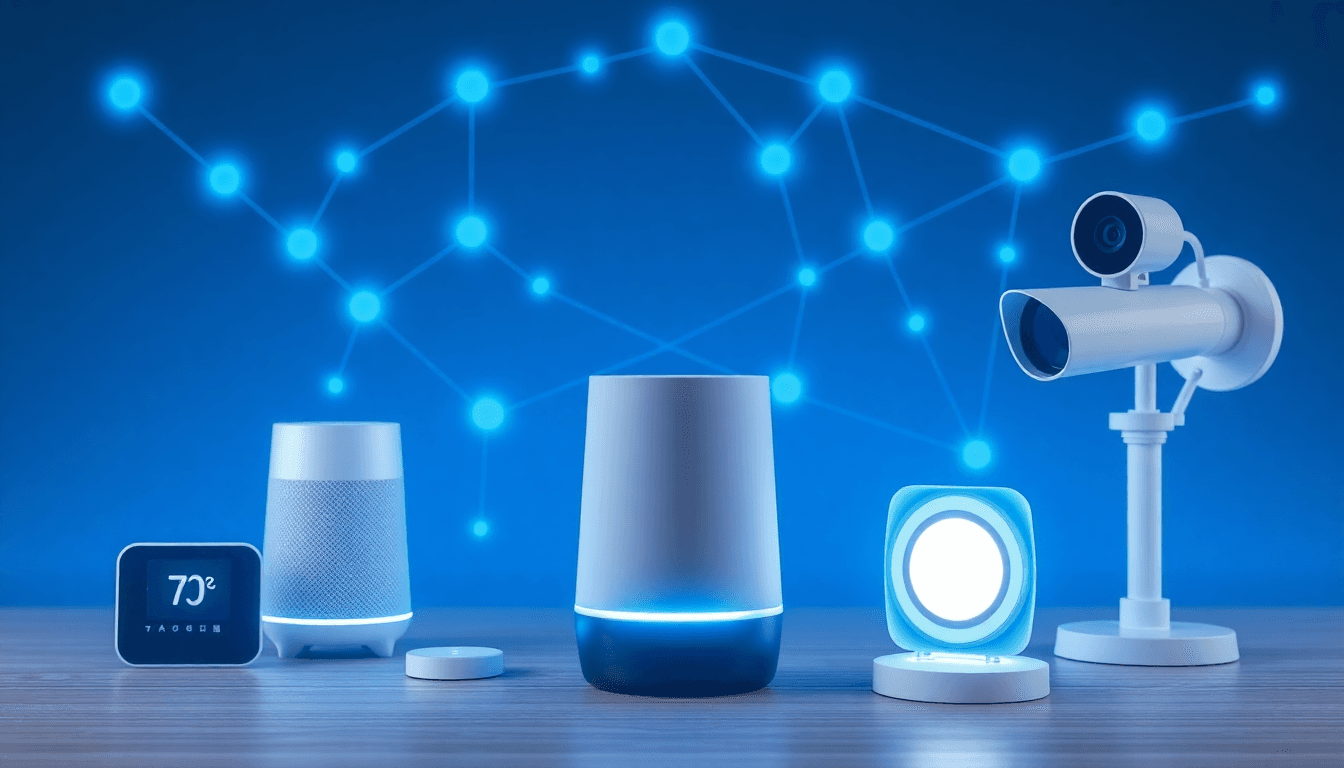
When AI Meets IoT: The Dawn of Smart Everything
The Internet of Things (IoT) gave us connected devices. Artificial Intelligence gave us smart decision-making. But when these two technologies converge, they create something far more powerful: an intelligent, connected ecosystem that learns, adapts, and optimizes itself.
Welcome to the age of AIoT—Artificial Intelligence of Things.
Understanding AIoT: More Than the Sum of Its Parts
What is IoT?
The Internet of Things refers to the billions of physical devices connected to the internet, collecting and sharing data. From smart thermostats to industrial sensors, IoT devices generate massive amounts of information about the world around them.
What is AI?
Artificial Intelligence enables machines to learn from data, recognize patterns, and make decisions. AI turns raw information into actionable insights.
What is AIoT?
AIoT combines these technologies: IoT devices collect data, AI analyzes it in real-time, and the system takes intelligent action. It's the difference between a camera that records video and a camera that recognizes faces, detects anomalies, and alerts security automatically.
Real-World Applications Transforming Industries
1. Smart Homes: Living Spaces That Think
Intelligent Climate Control
Modern smart thermostats don't just follow schedules—they learn. They understand your routines, preferences, and even local weather patterns to optimize comfort while minimizing energy use. AI analyzes data from motion sensors, weather forecasts, and historical patterns to predict when to heat or cool your home.
Predictive Maintenance
Your smart home now knows when appliances need attention before they break. AI monitors vibration patterns, energy consumption, and usage data to predict failures. Your washing machine alerts you to a potential issue before water floods your laundry room.
Voice-First Interfaces
Natural language processing powered by AI has made voice control actually useful. Smart assistants understand context, remember preferences, and can chain multiple actions together. "Good morning" doesn't just turn on lights—it adjusts the thermostat, starts your coffee, reads your calendar, and gives you a traffic update.
Enhanced Security
AI-powered cameras distinguish between family members, delivery drivers, and potential intruders. They recognize unusual patterns—like someone loitering near your door—and send relevant alerts without bombarding you with notifications every time a squirrel runs by.
2. Smart Cities: Urban Intelligence at Scale
Intelligent Traffic Management
AI analyzes data from traffic cameras, sensors, and GPS signals to optimize traffic flow in real-time. Smart traffic lights adjust timing based on actual conditions, not just schedules. Cities see reduced congestion, lower emissions, and faster emergency response times.
Smart Waste Management
IoT sensors in trash bins monitor fill levels, and AI optimizes collection routes. Trucks only go where needed, saving fuel and reducing emissions. Some cities have cut waste collection costs by 30% while improving service.
Predictive Infrastructure Maintenance
Sensors embedded in bridges, roads, and pipelines continuously monitor structural health. AI predicts when maintenance is needed, preventing catastrophic failures and extending infrastructure lifespan.
Environmental Monitoring
IoT sensor networks track air quality, noise levels, and pollution across cities. AI identifies pollution sources, predicts air quality changes, and helps officials make data-driven environmental policies.
3. Industrial IoT (IIoT): The Smart Factory
Predictive Maintenance
Industrial sensors monitor equipment vibration, temperature, and performance. AI analyzes this data to predict failures before they happen, scheduling maintenance during planned downtime. Manufacturers report 25-40% reduction in maintenance costs and 70% fewer breakdowns.
Quality Control
AI-powered computer vision systems inspect products at production speed, detecting defects invisible to human eyes. These systems learn from each inspection, continuously improving accuracy.
Supply Chain Optimization
IoT sensors track inventory, shipments, and equipment across the supply chain. AI optimizes routes, predicts delays, and automatically adjusts orders based on demand forecasts.
Worker Safety
Wearable sensors monitor worker vital signs and environmental conditions. AI detects dangerous situations—like heat stress or toxic gas exposure—and alerts workers and supervisors before injuries occur.
4. Healthcare: Connected Wellness
Remote Patient Monitoring
Wearable devices and home sensors track vital signs, medication adherence, and daily activities. AI analyzes this data to detect health deterioration early, alerting healthcare providers before emergencies occur.
Smart Hospitals
IoT sensors track equipment location, monitor hand hygiene compliance, and optimize patient flow. AI predicts patient deterioration, suggests diagnoses, and personalizes treatment plans based on real-time data.
Elderly Care
Smart home systems for seniors learn daily routines and detect deviations that might indicate health issues or emergencies. Falls, missed medications, or unusual activity patterns trigger automatic alerts to caregivers.
5. Agriculture: Precision Farming
Smart Irrigation
Soil sensors monitor moisture levels, and AI optimizes watering schedules based on crop needs, weather forecasts, and water costs. Farmers reduce water usage by 30-50% while maintaining or improving yields.
Crop Monitoring
Drones and ground sensors collect data on crop health, pest infestations, and growth patterns. AI identifies problems early and suggests targeted interventions, reducing pesticide use and improving harvests.
Livestock Management
Wearable sensors on animals monitor health, location, and behavior. AI detects illness early, optimizes feeding, and even predicts calving or lambing times.
The Technology Stack Behind AIoT
Edge Computing
Processing data on the device itself (at the "edge") rather than sending everything to the cloud reduces latency and bandwidth use. AI models run directly on IoT devices, enabling real-time decisions without internet connectivity.
5G Connectivity
The next generation of cellular networks provides the bandwidth and low latency needed for massive IoT deployments. 5G enables real-time communication between thousands of devices in small areas, making smart cities and factories feasible.
Digital Twins
Virtual replicas of physical systems allow AI to simulate scenarios, test optimizations, and predict outcomes without risk to real equipment. Engineers experiment with factory layouts, city planners model traffic changes, and building managers optimize energy use—all in virtual environments.
Blockchain for IoT Security
Decentralized ledger technology provides secure, tamper-proof records of IoT device data and transactions. This is crucial for supply chain transparency, device authentication, and secure automated transactions between machines.
Challenges in the AIoT Landscape
Security and Privacy
The Attack Surface Explodes
Every connected device is a potential entry point for hackers. Compromised IoT devices can be used to attack networks, steal data, or join botnets. AI adds complexity—adversarial attacks can fool AI systems into making wrong decisions.
Data Privacy Concerns
AIoT systems collect massive amounts of personal data. Who owns this data? How is it used? Smart home devices, wearables, and city sensors track detailed information about people's lives. Strong privacy protections and transparent data practices are essential.
Solutions:
- End-to-end encryption for all device communications
- Regular security updates and patch management
- Network segmentation to isolate IoT devices
- AI-powered anomaly detection to identify attacks
- Privacy-by-design principles in system architecture
Interoperability
The Standards Problem
Thousands of IoT devices use different protocols, formats, and communication standards. Getting devices from different manufacturers to work together seamlessly remains a challenge.
Solutions:
- Industry standards like Matter for smart home devices
- Open APIs and interoperability frameworks
- Middleware platforms that translate between protocols
- Industry consortiums working toward common standards
Scalability
Managing Millions of Devices
Enterprise IoT deployments can involve millions of devices. Managing updates, monitoring health, and processing data at this scale requires sophisticated infrastructure.
Solutions:
- Cloud-native IoT platforms with auto-scaling
- Edge computing to distribute processing
- AI-powered device management and predictive maintenance
- Automated deployment and configuration tools
Data Quality and Management
Garbage In, Garbage Out
AI is only as good as the data it learns from. IoT sensors can malfunction, networks can drop data, and devices can be misconfigured. Poor data quality leads to incorrect AI decisions.
Solutions:
- Data validation and cleaning pipelines
- Sensor calibration and health monitoring
- Redundant sensors for critical measurements
- AI systems that detect and compensate for data quality issues
The Future of AIoT
Autonomous Systems
Future AIoT systems will operate with minimal human intervention. Self-driving cars coordinate with smart traffic infrastructure. Smart buildings manage their own energy, maintenance, and security. Supply chains self-optimize in real-time.
Ambient Intelligence
Technology will fade into the background, becoming invisible and ambient. Your environment will anticipate your needs—adjusting lighting, temperature, and music before you even think to ask. The boundary between digital and physical worlds blurs.
Digital Ecosystems
Devices won't just be connected—they'll collaborate. Your car talks to your home, which talks to the grid, which talks to renewable energy sources. AI optimizes across entire ecosystems, balancing individual needs with system-wide efficiency.
Human-AI Collaboration
AIoT augments human capabilities rather than replacing them. Workers use AR glasses with AI overlays to repair complex equipment. Doctors use AI-analyzed patient data to make better diagnoses. Farmers use AI recommendations to optimize crop management.
Business Opportunities in AIoT
New Business Models
Product-as-a-Service
Instead of selling equipment, companies sell outcomes. HVAC companies sell "comfort as a service," with AI optimizing systems and guaranteeing results. Manufacturers retain ownership of industrial equipment, selling guaranteed uptime instead.
Data Monetization
IoT data becomes a valuable asset. Anonymized, aggregated data from millions of devices provides insights for market research, urban planning, and product development.
Ecosystem Orchestration
Companies that create platforms connecting multiple IoT devices and services capture value from the ecosystem. Apple HomeKit, Google Home, and Amazon Alexa compete to be the central hub of smart homes.
Industry Transformation
Insurance
IoT data enables usage-based insurance. Safe drivers pay less. Buildings with smart leak detection get lower premiums. Health insurers reward active lifestyles tracked by wearables.
Retail
Smart stores track inventory in real-time, optimize layouts based on customer behavior, and enable frictionless checkout. AI predicts demand and automatically reorders stock.
Energy
Smart grids balance supply and demand in real-time. AI predicts renewable energy production and optimizes storage. Consumers become "prosumers," selling excess solar power back to the grid.
Getting Started with AIoT
For Businesses
Start Small, Think Big
Begin with pilot projects that solve specific problems. A smart manufacturing line. A connected warehouse. A predictive maintenance program. Learn from these pilots before scaling.
Invest in Infrastructure
AIoT requires robust connectivity, data platforms, and security systems. Build the foundation before adding devices.
Develop AI Capabilities
Whether building in-house or partnering, AI expertise is crucial. Data scientists, ML engineers, and AI strategists are essential roles.
Prioritize Security
Security can't be an afterthought. Design it into systems from the start. Regular audits, updates, and employee training are essential.
For Consumers
Start with a Hub
Choose an ecosystem (Apple, Google, Amazon, or open platforms like Home Assistant) and build around it. This ensures devices work together.
Focus on Value
Don't buy gadgets for their own sake. Identify problems you want to solve—energy savings, security, convenience—and choose devices that address those needs.
Understand Privacy Trade-offs
Every connected device collects data. Read privacy policies. Use strong passwords. Disable features you don't need. Consider local processing options that don't send data to the cloud.
The Bottom Line
AIoT represents the next evolution of computing—moving from devices we interact with to environments that interact with us. The combination of ubiquitous sensing and intelligent decision-making creates possibilities that seemed like science fiction just years ago.
The technology is here. The infrastructure is building. The opportunities are massive.
Companies that embrace AIoT will operate more efficiently, serve customers better, and create entirely new products and services. Those that don't will find themselves outpaced by competitors who do.
The intelligent connected world isn't coming. It's already here.
Ready to harness the power of AI and automation for your business? 3ClickClaw helps businesses build intelligent workflows, AI-powered chatbots, and smart automations—no coding required. Connect your systems and unlock the potential of AIoT today.